


A Quiet Revival: Why Incandescent Lights Are Back in the Spotlight
While LED technology continues to dominate efficiency-focused conversations, a quieter but meaningful shift is happening in holiday décor. Classic incandescent Christmas lights are making a deliberate comeback—particularly among retailers, boutique hotels, event planners, and design-led commercial spaces.
In 2026, this is no accident or nostalgia-for-nostalgia’s-sake. The renewed interest is driven by one simple truth: incandescent light delivers an emotional warmth that LEDs still struggle to replicate.
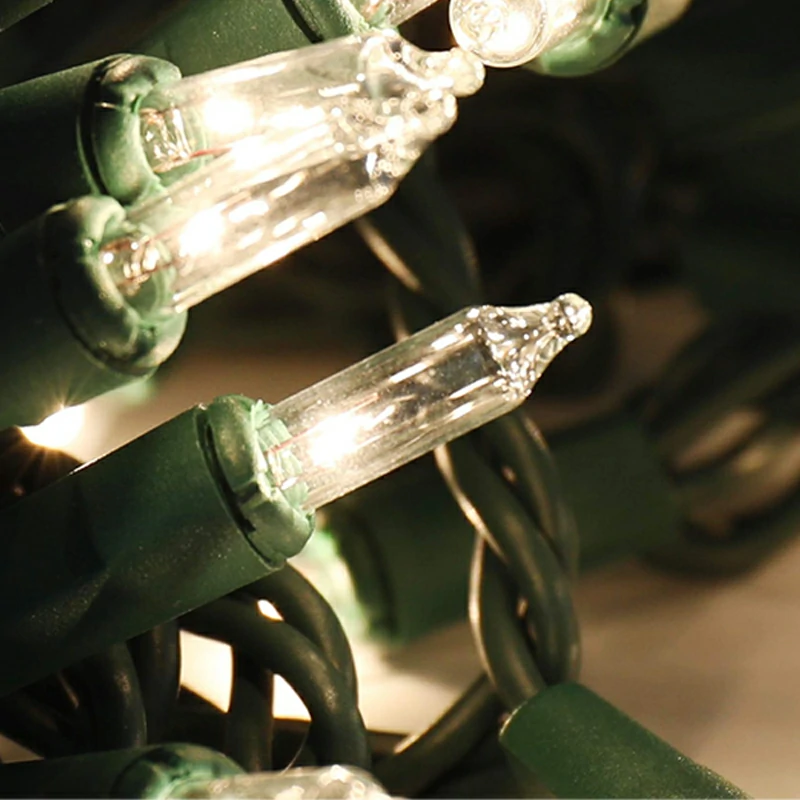
High-end restaurants, heritage properties, winter markets, and interior designers are once again choosing incandescent strings to create environments that feel human, intimate, and timeless.
The Glow LEDs Still Can’t Replace
A Warmth That Feels Like Home
Incandescent mini lights naturally emit light in the 2700–2900K range, with near-perfect color rendering. The result is a soft golden glow that flatters skin tones, enriches wood textures, and gives ornaments real depth.
This is what people instinctively describe as “real Christmas light.” It doesn’t just illuminate a space—it changes how the space feels.
True Sparkle and Visual Depth
Unlike most LEDs, which produce a flat or evenly diffused glow, each incandescent bulb acts as a distinct point of light. When wrapped around a tree or woven through garlands, they create natural highlights, shadows, and sparkle that give displays visual dimension.
For photo-driven environments—boutiques, restaurants, or seasonal pop-ups—this depth matters more than raw brightness.
Emotion You Can’t Engineer
For Millennials and Gen X audiences in particular, incandescent lighting triggers powerful emotional associations. Childhood memories, family gatherings, and classic holiday films all share the same visual language.
That’s why luxury lodges, heritage museums, independent cafés, and vintage-themed venues continue to rely on traditional incandescent Christmas lights to build emotional connection—not just decoration.
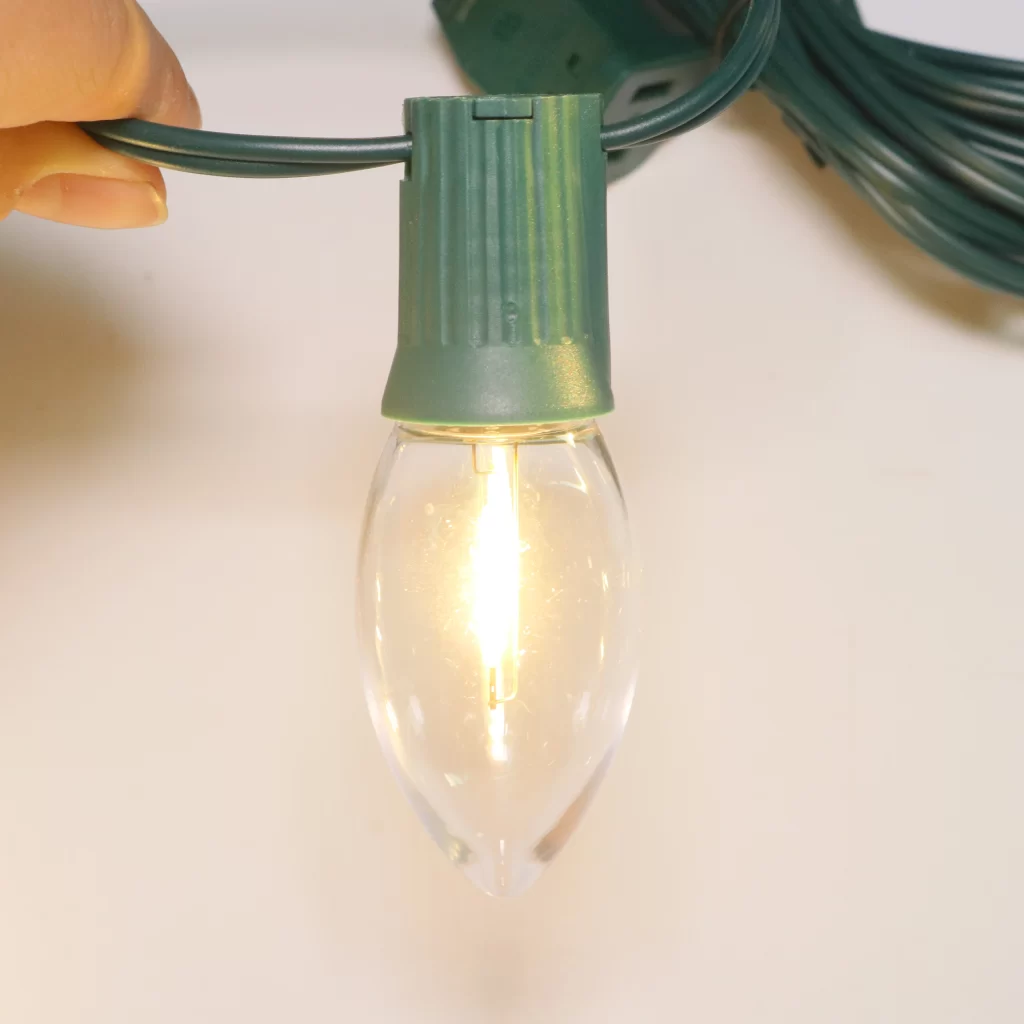
Where Incandescent Lighting Still Wins in 2026
Short-Season, High-Impact Installations
For displays running 4–8 weeks per year—Christmas markets, photo studios, wedding venues, pop-up retail—the efficiency gap between LED and incandescent is negligible compared to the visual payoff.
In these cases, ambiance outweighs energy optimization.
Spaces with Architectural Character
Incandescent lighting pairs exceptionally well with:
- Exposed brick and reclaimed wood
- Wood cabins and alpine lodges
- Victorian or heritage-style interiors
- Retro diners, craft breweries, antique stores
The visible filament glow complements traditional materials in ways modern LEDs rarely do.
The Hybrid Lighting Strategy
Many designers now adopt a hybrid approach:
- Incandescent lights for accent zones—mantels, wreaths, table displays, glass ornaments
- LEDs for structural outlines and long-run installations
This combination preserves emotional warmth while maintaining efficiency where it matters most.
What Commercial and B2B Buyers Need to Know
Modern incandescent Christmas lights are not the safety risks they once were.
Today’s UL-listed incandescent light strings use:
- Low-wattage C7 or C9 bulbs (typically 5–7W)
- Flame-retardant, commercial-grade wire
- “Stay-lit” or shunt technology to prevent total failure if one bulb goes out
A typical 100-bulb, 50-foot incandescent string draws around 40–50 watts. Over a standard 4-week season at 6 hours per day, the additional electricity cost compared to LED is roughly $15–25 per set.
For most commercial applications focused on brand experience and atmosphere, that cost is not an expense—it’s a design investment.
Quality Determines Everything
Not all incandescent strings are created equal. Low-cost retail versions often fail due to thin wire, inconsistent filaments, and weak soldering.
Professional-grade sets feature:
- 20–22 AWG pure copper wiring
- Consistent filament construction
- End-to-end connectability
- Multi-season durability
At Golden Vessel, we’ve manufactured both LED and incandescent lighting for over 15 years. Our UL-certified incandescent mini light strings are built for commercial environments where reliability matters as much as appearance.
The Real Bottom Line
In 2026, incandescent Christmas lights are no longer the default choice—but they remain the right choice for many applications.
When warmth, nostalgia, and emotional resonance matter more than absolute efficiency, the classic incandescent glow still delivers something LEDs can’t fully replace.
If you’re considering a hybrid lighting strategy—or wondering where incandescent still makes sense for your project—we’re happy to help you find the right balance.
Classic light isn’t outdated. It’s intentional.